What Venetian Plaster Brings To A Room
Troweled, burnished and full of movement
Venetian plaster is a wall finish you notice twice: once when you walk in, and again when the light changes and the wall seems to shift color. It's put on by hand with a steel trowel, layer by thin layer, and then burnished until it has a soft sheen.
Modern Coat Painting installs Venetian plaster for feature walls, powder rooms, entries, dining rooms, fireplace surrounds, hallways with arches and ceilings around Mooresville and Charlotte.
Have a venetian plaster project in mind? Call or text (516) 424-5119 to talk through colors and which wall would make the best feature.
How Venetian Plaster Is Applied
The wall has to be right first. We patch, sand and prime it so there are no ridges or soft spots, because plaster magnifies whatever is under it.
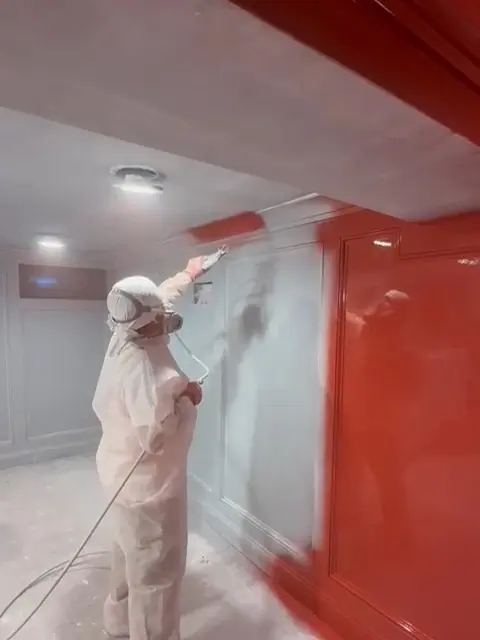
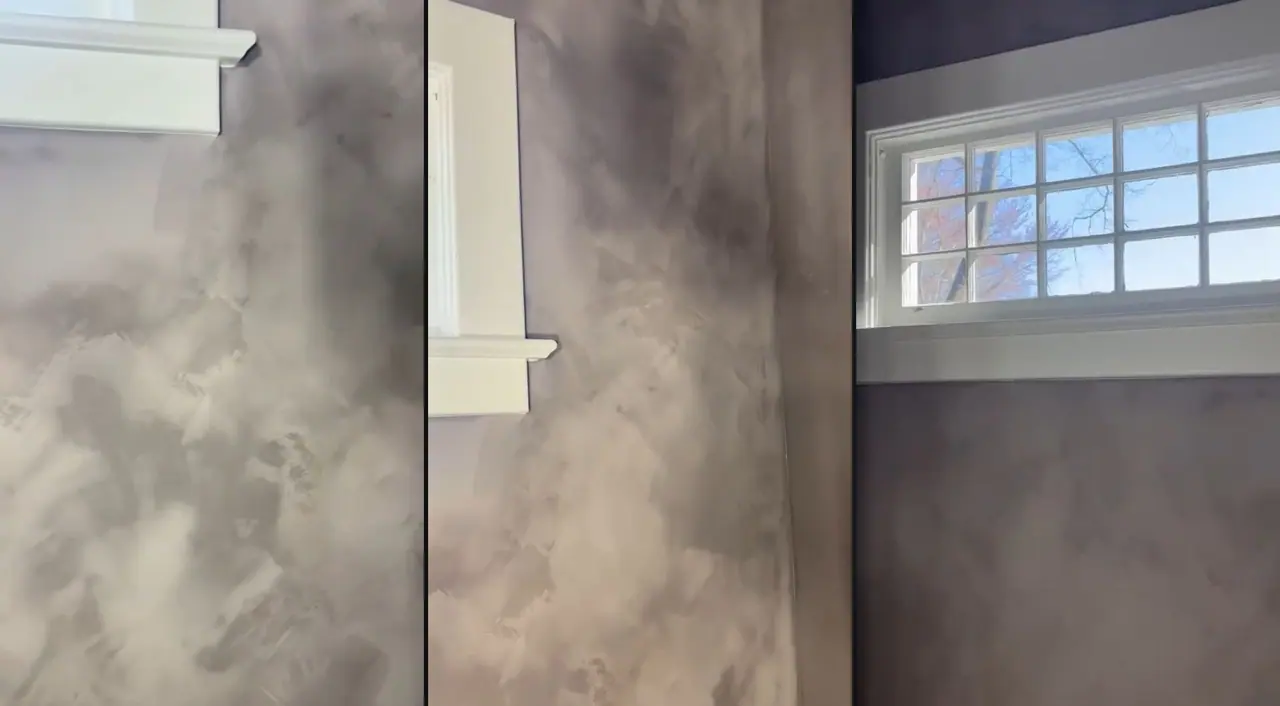
Then the plaster goes on in very thin passes, each one pressed and crossed with the trowel at a slightly different angle. Those overlapping strokes are what create the clouded, stone-like movement. Tall walls and arched hallways get worked from scaffolding so every pass stays even.
The last step is burnishing. The trowel is pressed flat over the dry surface until the plaster tightens up and starts to reflect light. More burnishing means more sheen.
Looks You Can Choose
Plaster can read quiet or dramatic depending on the color and the trowel work.
Dark, Moody Walls
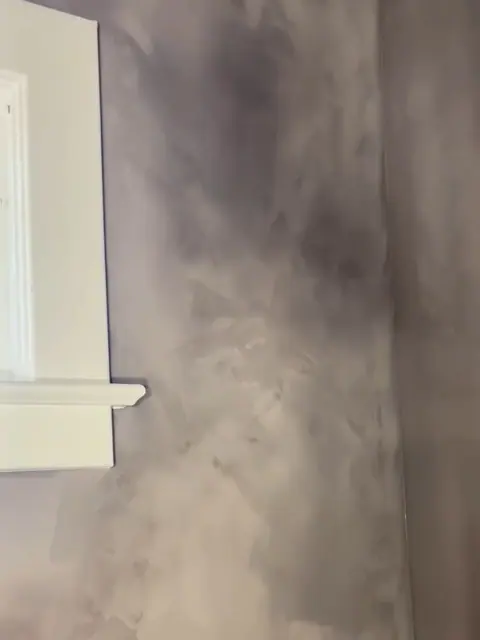
Charcoal and deep gray plaster gives a room a lot of character without feeling flat. The light and dark patches in the trowel work keep a dark wall from looking like a block of paint.
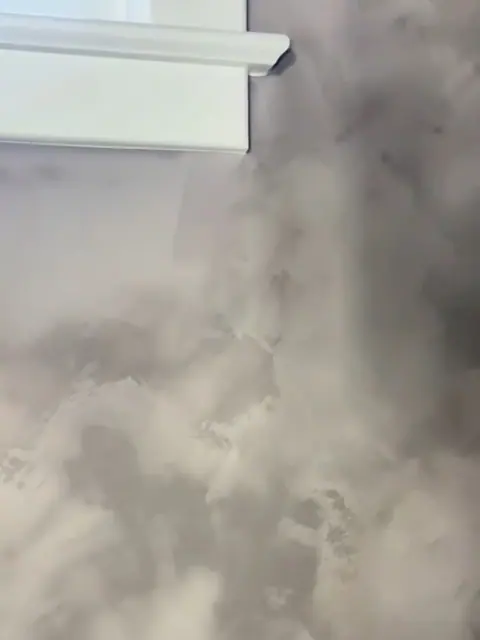
Soft, Light Neutrals
Warm whites, stone and greige tones keep the movement subtle. They work well in hallways, around arches and in rooms where you want texture without a strong color.
Where Venetian Plaster Works Best
Feature walls behind a bed, a sofa or a dining table are the most common spot. Powder rooms are another favorite, since a small room with plaster on every wall feels finished in a way paint can't match.
We also plaster fireplace surrounds, curved walls, arches and ceilings. For wet areas, ask us about it when we visit, since some spots need a sealer or a different product.
Living With A Plaster Wall
A burnished plaster wall is harder than it looks and can be wiped with a soft damp cloth. Small scuffs can often be buffed out, and a damaged area can be repaired and blended back in by hand.
Venetian Plaster Questions
Is Venetian plaster the same as a faux finish?
No. A faux finish is paint made to look like plaster. Venetian plaster is real lime-based plaster troweled onto the wall, so the depth and sheen come from the material itself.
Can you put Venetian plaster over my existing drywall?
Yes. Most of our plaster goes over painted drywall. We patch, sand and prime it first so the plaster has a smooth, sound base.
Does Venetian plaster crack?
Properly applied plaster is thin and bonded to the wall, so it moves with the wall. If the drywall underneath cracks, the plaster can show it, and those spots can be repaired and blended in.
How long does a plaster wall take?
It depends on the size and the look. Each layer has to dry before the next one, and the burnishing comes last, so even a single wall takes more than one visit. We'll give you a schedule with your estimate.
Can I see the finish before you start?
Yes. Ask us when we come out, and we'll talk about colors and show you examples of our plaster work so you know what to expect.